There is nothing quite like flying in a hot air
balloon. There is no engine pushing you through the
air and no fixed route to follow. Once the balloon
lifts away from the ground, it becomes part of the
wind.
Balloon flights normally take place early in the
morning around sunrise or late in the day before
sunset. Those are generally the times when winds are
lighter and the atmosphere is most suitable for
ballooning.
The flight itself is often about an hour, but
ballooning is much more than the time spent in the
air. Preparing the balloon, inflation, launch,
flight, landing, recovery, and the trip back with
the chase crew are all part of the experience.
Getting Ready to Fly
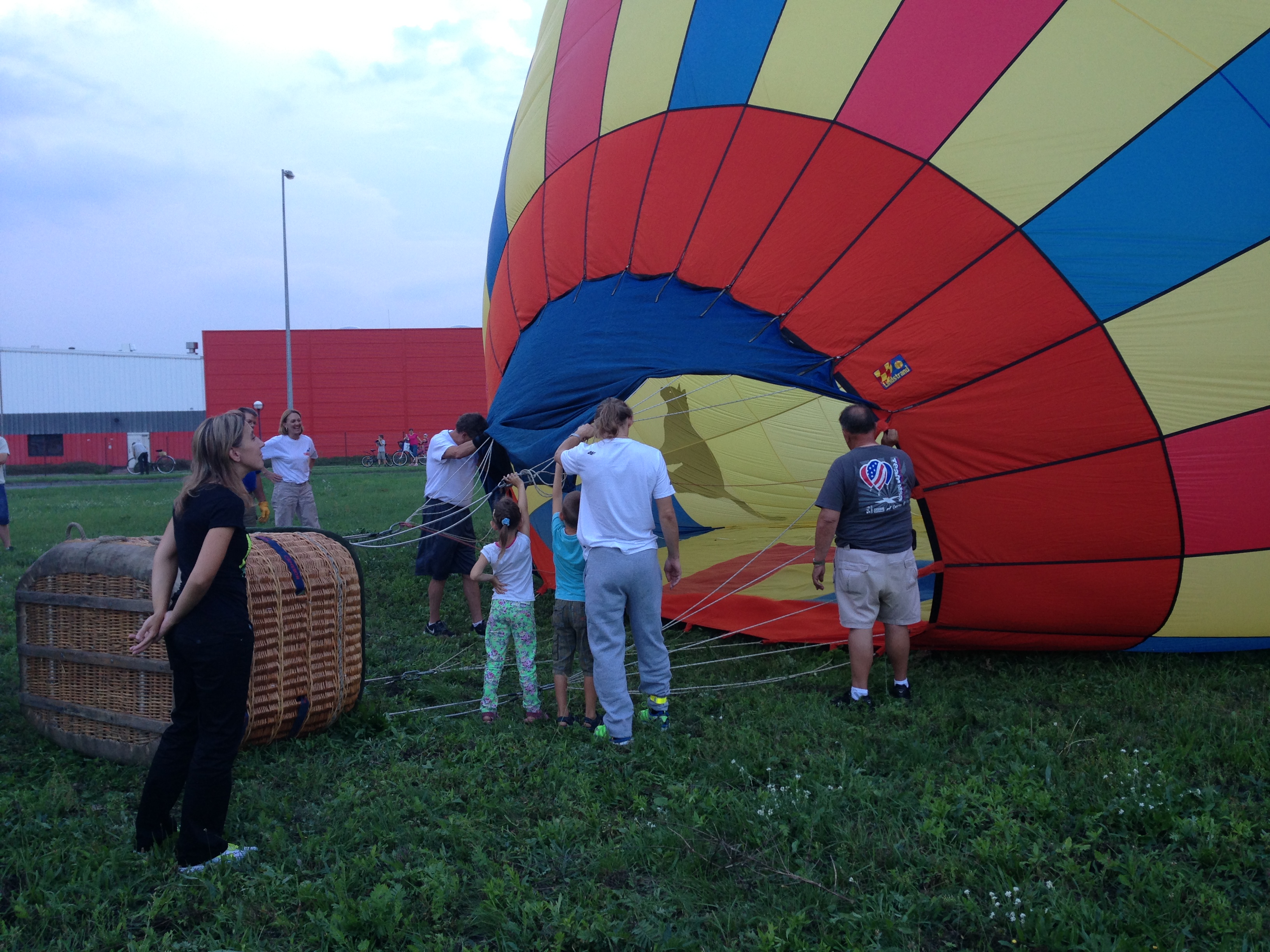
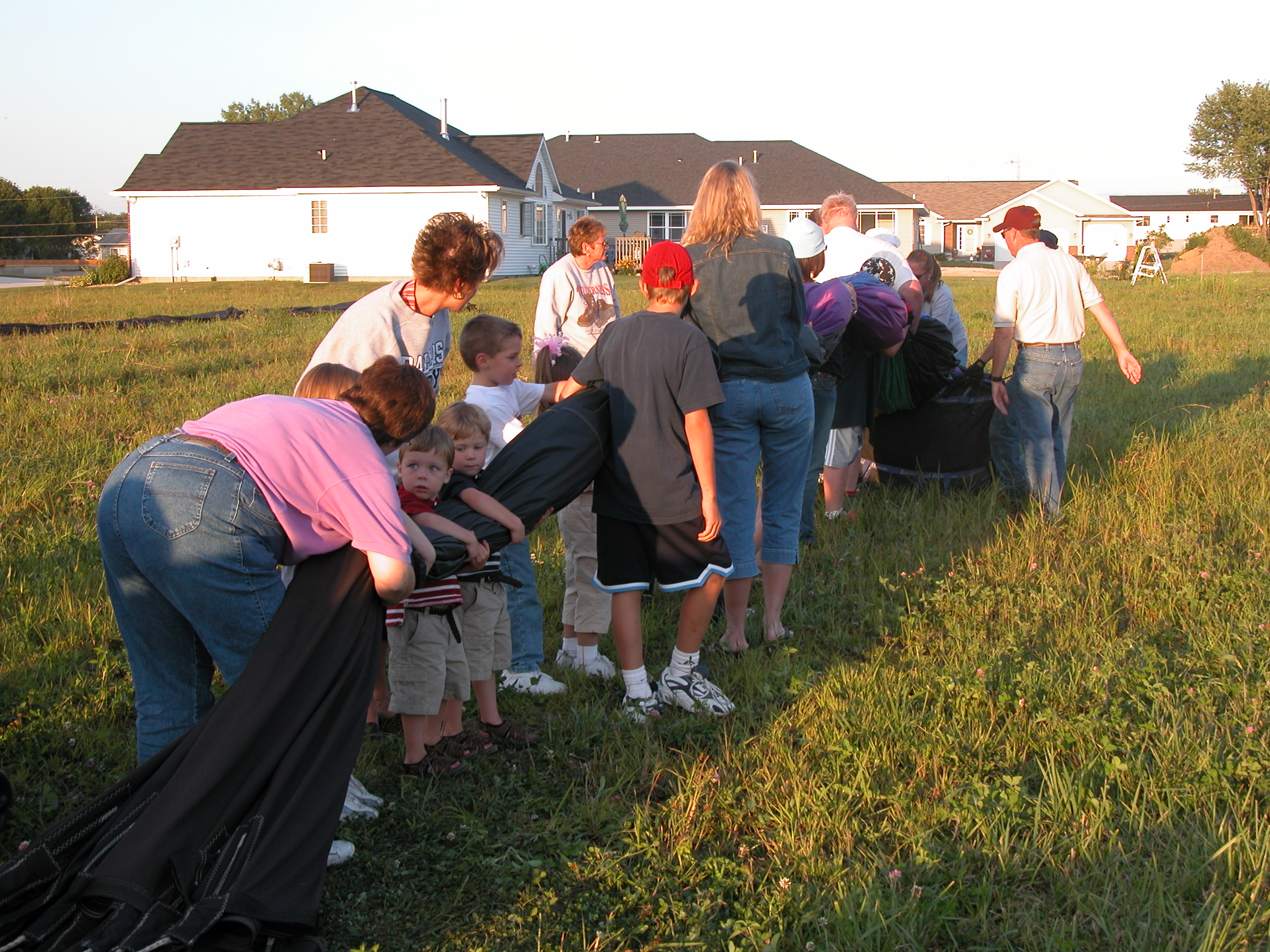
A balloon begins as a surprisingly large bundle of
fabric lying on the ground. The crew stretches out
the envelope, attaches it to the basket, and uses a
large fan to fill it with cool air.
Once the envelope has taken shape, the pilot lights
the burners. Heated air causes the balloon to rise
upright over the basket. What looked like a pile of
fabric only minutes earlier is suddenly a complete
aircraft ready to fly.
Liftoff
Liftoff can be surprisingly gentle. One moment the
basket is resting on the ground and the next you
realize the ground is quietly moving away beneath
you.
Because the balloon travels with the surrounding
air, there is often very little sensation of wind
while you are flying. The burners occasionally
interrupt the quiet, but between burns balloon
flight can be remarkably peaceful.
Where Are We Going?
That is one of the great questions in ballooning.
A balloon does not steer like an airplane or a car.
The direction of the flight is determined primarily
by the wind.
Pilots can climb and descend to find winds moving
in somewhat different directions at different
altitudes. Reading those winds and using them well
is one of the skills—and pleasures—of balloon
piloting.
A flight might pass over neighborhoods, fields,
woods, rivers, or countryside. No two flights are
quite the same.
The Chase Crew
While the balloon is traveling through the sky,
another part of the adventure is happening on the
ground.
The chase crew follows the balloon, stays in contact
with the pilot, watches the developing flight path,
and tries to be near the landing area when the
balloon comes back to earth.
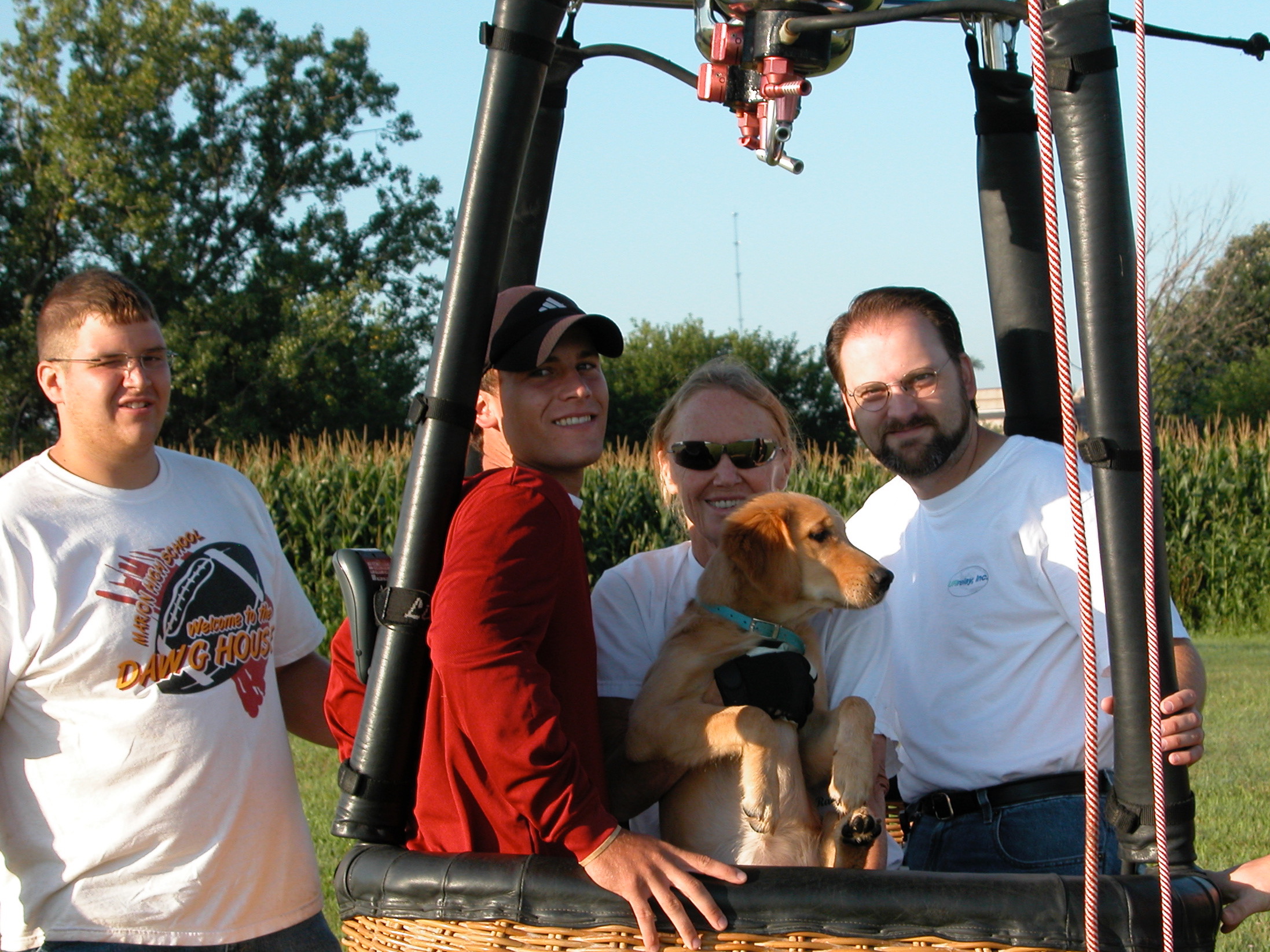
A good crew is an essential part of ballooning—and
sometimes getting the truck and trailer to the
landing site is an adventure all its own.
Coming Back to Earth
Balloon pilots spend much of a flight thinking
ahead about where they may be able to land. They
consider wind, terrain, obstacles, crops, roads,
power lines, and suitable open areas.
Some landings are so gentle that the basket barely
moves. Others can include a bump, a short drag, or
the basket tipping onto its side. That is part of
flying an aircraft whose landing speed and direction
are influenced by the wind.
Weather Makes the Decisions
Ballooning is entirely dependent on suitable
weather. Wind at the surface is only part of the
picture; pilots also consider winds aloft,
approaching weather, visibility, thunderstorms,
atmospheric stability, and what conditions are
expected to do during the flight.
Sometimes the safest and most professional flying
decision is simply not to fly.
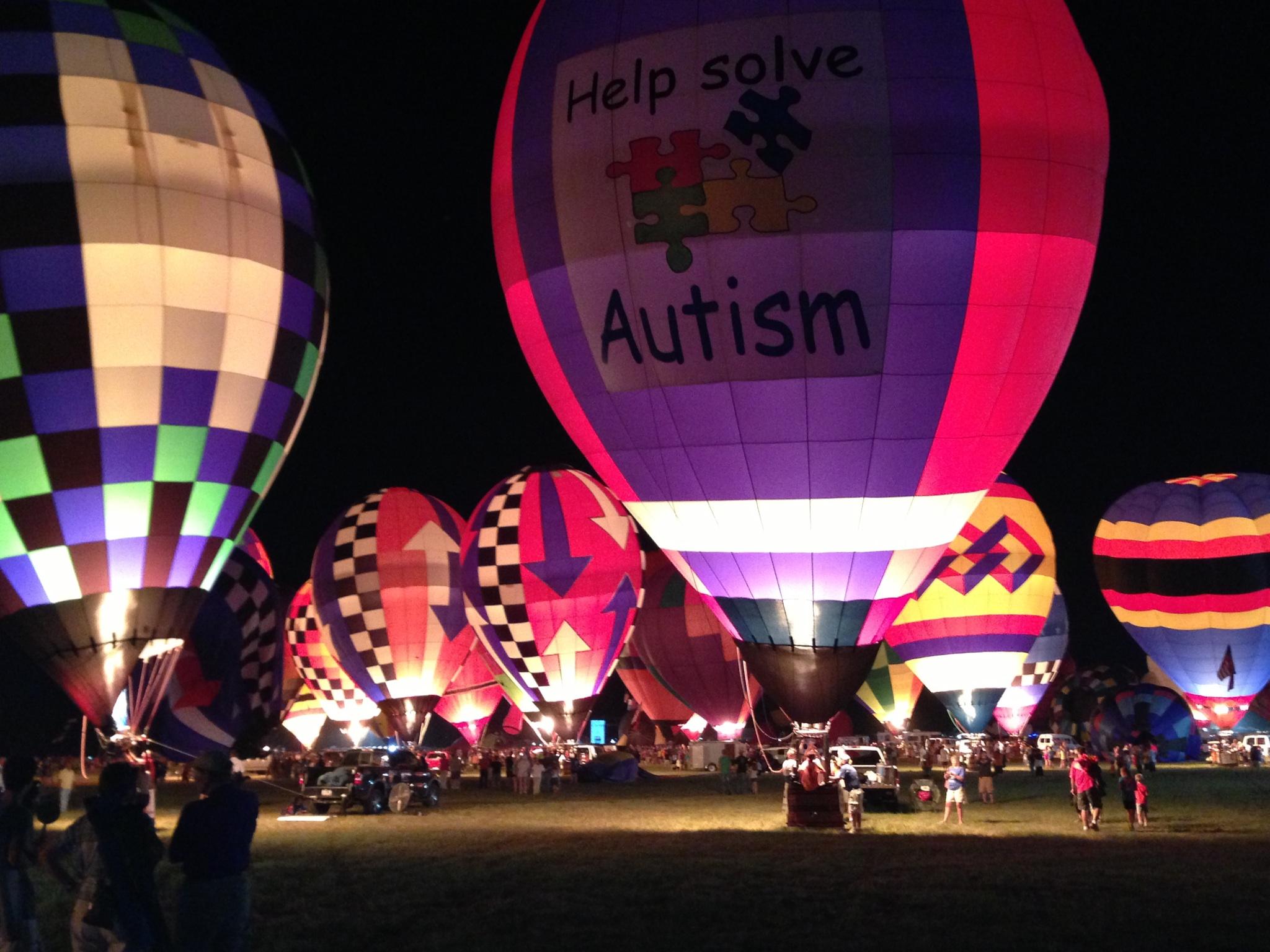
Tethered Balloons
A tether is different from a free flight. The
balloon is secured to strong lines attached to
suitable anchor points, allowing it to rise above
the ground and descend again while remaining in a
controlled area.
Tethering has long been used for demonstrations,
community events, and opportunities to introduce
people to hot air balloons without making a full
cross-country flight.
Educational Opportunities
Ballooning is a wonderful way to explore science,
weather, aviation, geography, teamwork, and the
simple principle that warm air rises.
Buzzard's Glory pilots have shared the art and
science of ballooning with schools, organizations,
and community groups for decades.